
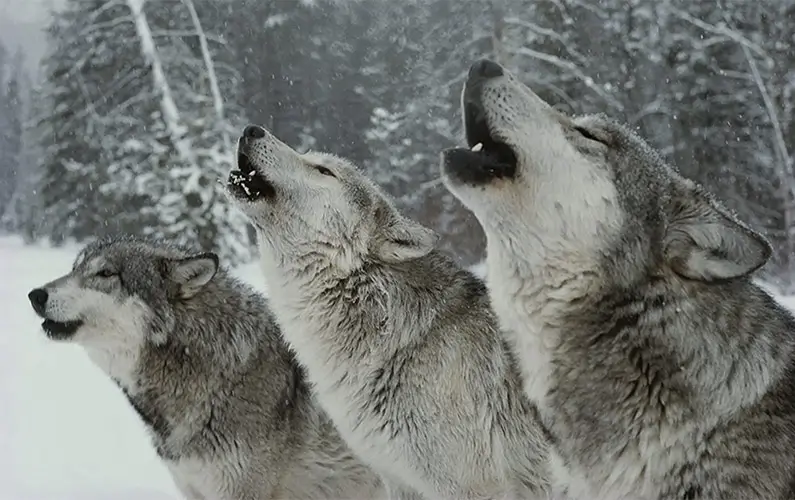
Wolves have fascinated humans for thousands of years. Feared, admired, and often misunderstood, these iconic predators play a crucial role in the balance of the wild. From their complex social structures to their remarkable intelligence and endurance, wolves are far more extraordinary than many people realize. In this article, we explore ten incredible facts that reveal why wolves continue to captivate wilderness lovers around the world.
1 Wolves are endurance runners and skilled sprinters that often wear down their prey…
Wolves are fast runners and well adapted to hunting their prey. The average running speed of a wolf is around 40 to 50 kilometers per hour, but they usually reach these speeds only during a chase and rarely sprint at full speed until they are very close to their target.
They are not necessarily the fastest runners in the animal kingdom, but what truly sets them apart is their exceptional endurance. Wolves can pursue prey over long distances, relying on stamina rather than explosive speed. Their ability to cooperate as a pack and hunt strategically gives them a major advantage, allowing them to tire out and eventually capture much larger animals. [source]
2 Wolves are carnivorous predators whose diet is primarily made up of meat…
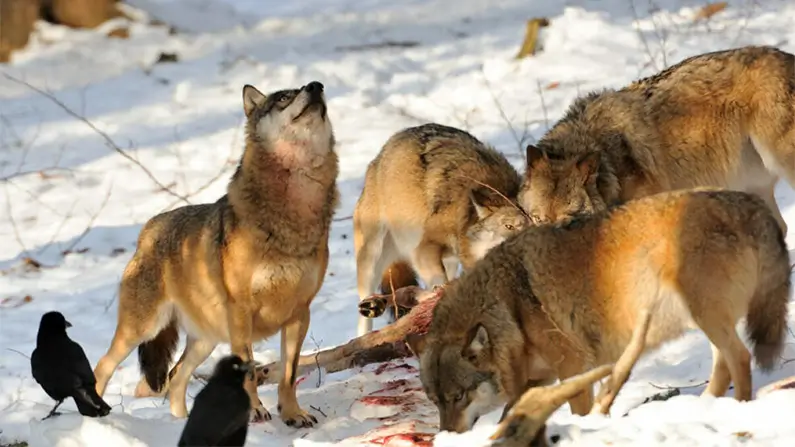
The amount of food a wolf eats each day varies depending on several factors, including size, age, activity level, and prey availability within its territory. In general, an adult wolf consumes around 2 to 5 kilograms of meat per day. However, wolves are capable of eating large quantities in a single meal when they manage to hunt and kill bigger prey.
Some of their preferred food sources include deer and other ungulates, smaller mammals, birds, and carrion from animals that have died of natural causes or been killed by other predators.
It’s also important to note that wolves can experience periods of food scarcity and are able to survive on limited amounts of food when necessary. As highly adaptable hunters, they adjust to different prey opportunities and food sources across their territories. [source]
3 Wolves are also highly devoted parents…
The parents, especially the alpha pair, care for and protect the pups, feeding them by chewing food and regurgitating it directly into the pups’ mouths. This close parental involvement is essential to the survival of the young.
Wolves mate during a specific breeding season, which usually occurs in winter. While the exact timing varies slightly depending on where wolves live, it most commonly takes place between January and March in most regions.
Wolf mating is a key part of pack structure and reproductive success. After a gestation period of about 63 days, the female gives birth to her pups, typically in spring. [source]
You may also like
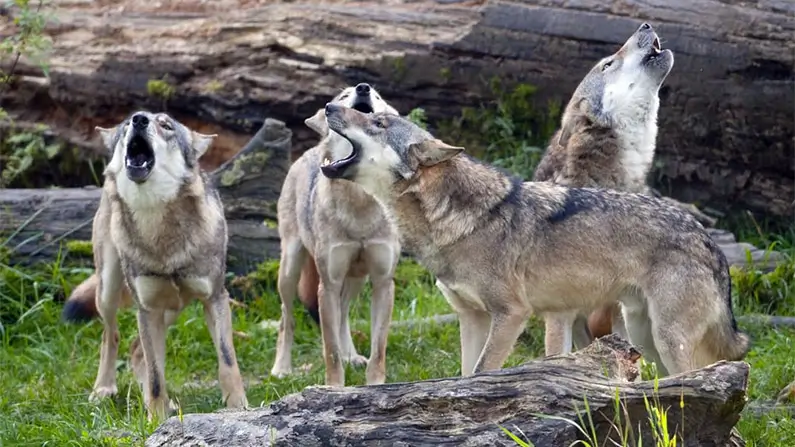
4 Wolf howling serves many important purposes…
A wolf’s howl can be used to communicate with separated pack members, to gather the pack before a hunt, or to warn rival packs to stay away.
Typically, a wolf’s howl lasts only about five seconds, yet it can carry over vast distances, making it one of the most powerful communication tools in the wild. [source]
5 Wolves have exceptional hearing and an extraordinary sense of smell…
In addition to their impressive sense of smell, wolves possess remarkably sharp hearing. Under optimal conditions, they can detect sounds from distances of up to 16 kilometers.
Wolves are also believed to have a similar number of scent receptors as domestic dogs, estimated at around 200 to 300 million. This powerful ability to detect and analyze scents plays a crucial role in their survival, helping them track prey, navigate territories, and communicate with other wolves. [source]
6 Wolves also communicate through facial expressions…
Yes, they bark and howl, but beyond vocal sounds, wolves rely heavily on facial expressions and body language to communicate. They have been observed pulling their ears back, curling their lips, and baring their teeth to signal emotions, intentions, or social status.
The ways wolves use their bodies to communicate are highly nuanced and diverse, allowing them to convey complex messages without making a sound. [source]

You may also like
7 Wolves care for all pups, even those that are not their own…
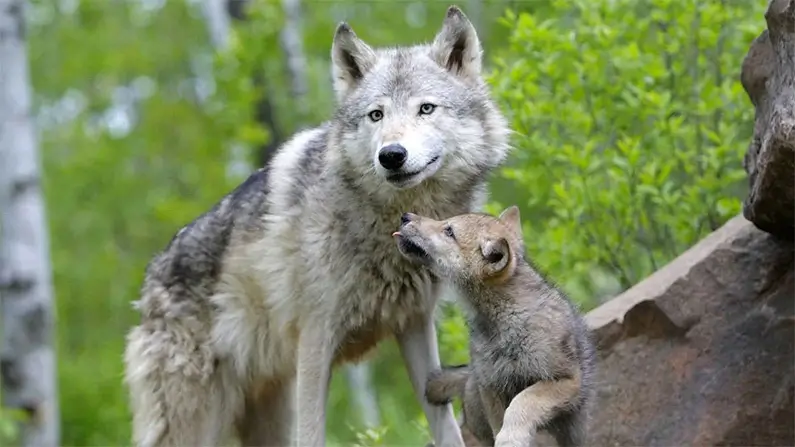
In a wolf pack, it is common for all members to share responsibility for raising the pups. The most prominent role is usually taken by the alpha pair, meaning the dominant male and female of the pack. These alpha parents lead the effort to raise, feed, and protect the young.
Other pack members, including non-alpha adults and sometimes older siblings, also help care for the pups by hunting and sharing food, playing with them, and keeping watch to ensure their safety. This strong sense of cooperation and shared parenting increases the pups’ chances of survival. [source]
8 Wolves can easily crush bones with their jaws…
A wolf’s jaw possesses incredible strength. Wolves have one of the strongest bite forces among all canids and can crush bones with just a few bites. One key difference between wolves and domestic dogs is that wolves have much more powerful jaw muscles and a stronger overall bite than most dog breeds.
This physical advantage is a result of the wolf’s natural lifestyle as a wild predator, where survival depends on the ability to kill prey and consume tough bones and tissue. Dogs, on the other hand, have been shaped through selective breeding for a wide range of roles, meaning their bite strength varies greatly depending on breed and purpose. [source]

You may also like
9 Wolves possess remarkably superior vision…
Not only do wolves have exceptional hearing and an outstanding sense of smell — they also have impressive eyesight. The outer edges of a wolf’s retina are highly sensitive to movement, giving them excellent motion detection.
In addition, wolves have excellent night vision and strong peripheral vision, allowing them to spot prey even in low-light conditions and across wide areas of their surroundings. These visual advantages play a crucial role in both hunting and survival. [source]
10 Wolves are extremely territorial…
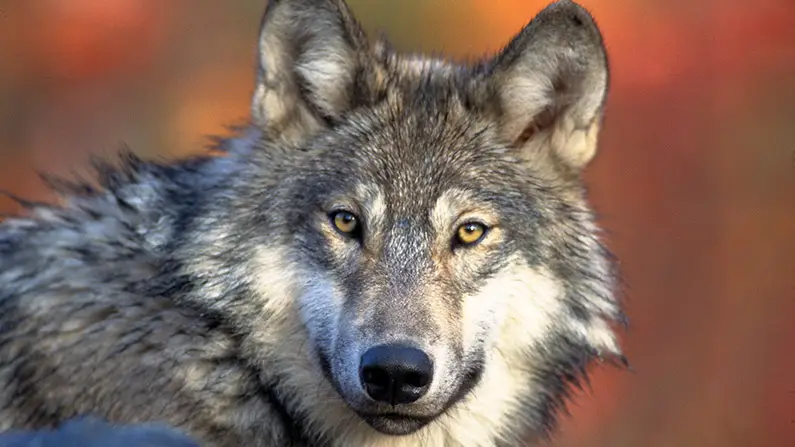
Like many dogs, wolves are highly territorial animals. They establish territories that are often larger than what they strictly need to survive, which helps ensure a consistent and reliable supply of prey.
Maintaining large territories also reduces competition with neighboring packs and supports long-term survival in the wild. [source]
You may also like
5 Common Questions About Wolves
Direct attacks are extremely rare. These animals generally avoid people and prefer to stay far away from human activity. Most negative encounters are linked to habitat loss or unusual circumstances.
They inhabit a wide range of environments, including forests, tundra, mountains, and grasslands, mainly across North America, Europe, and parts of Asia.
They use a combination of howls, body language, facial expressions, and scent marking to coordinate hunts, defend territory, and maintain social bonds.
Their diet consists mainly of large ungulates like deer and elk, but they also consume smaller animals and carrion when available.
They live in highly organized family groups, where cooperation is essential for hunting, raising young, and defending territory.