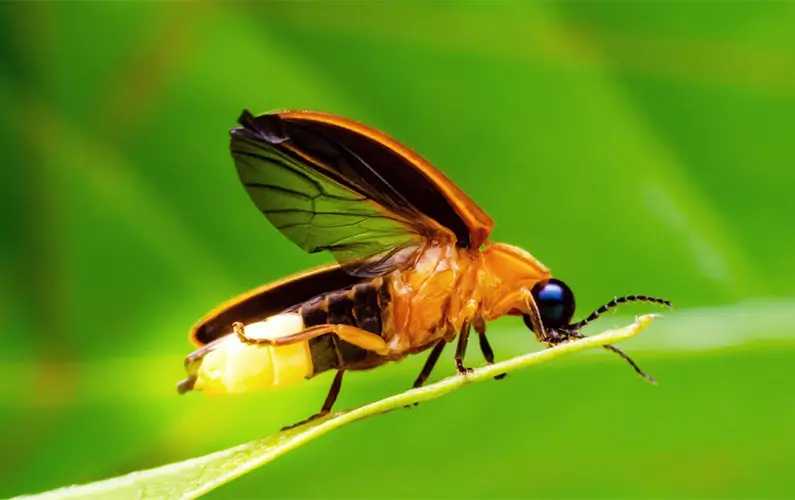
At dusk, tiny creatures transform nature’s darkness into a magical glow. Fireflies (Lampyridae) — the luminous artists of summer nights — captivate us with their enchanting light and spark curiosity about the mysteries of bioluminescence. Below, you’ll find ten fascinating facts and curiosities you probably didn’t know about fireflies until now.
1 Fireflies aren’t actually flies at all…
The name “fireflies” is misleading, since these fascinating creatures don’t belong to the order Diptera, like true flies do. Fireflies — known as Lampyridae — are actually beetles, part of the order Coleoptera. Their glowing ability, called bioluminescence, is mainly used as a form of communication to attract mates. So despite the name, fireflies aren’t flies at all. Confusing, right? [source]
2 This is how fireflies produce their glowing light…
Fireflies glow thanks to a chemical reaction inside their abdomen involving luciferin, calcium, ATP, and oxygen. This oxidation process is commonly known as bioluminescence (as mentioned earlier). Fireflies aren’t alone in this ability — glowworms also share this remarkable trait. [source]
3 Here’s how big — and how tiny — fireflies can be…
With around 2,000 known species, fireflies vary widely in shape, color, size, and features such as antennae. One of the largest species, Phausis reticulata, can reach up to about 2 centimeters in body length. It’s known for its distinctive light signals and is native to eastern North America.
At the other extreme, one of the smallest species, Pteroptyx malaccae, measures just 3–5 millimeters and is found in Southeast Asia. [source]
You may also like
4 You don’t need to panic if your dog or cat eats a firefly…
If you live in parts of the world where fireflies are common, you may have heard claims that they are extremely poisonous to pets, and that a single firefly could be life-threatening if eaten by a dog or cat. This claim, however, isn’t entirely true.
While fireflies can be toxic, it would take a very large number to cause serious harm. Luckily, most animals avoid eating fireflies altogether, as these insects release a bitter taste and strong odor designed to deter predators. [source]
5 Some fireflies even feed on other fireflies…
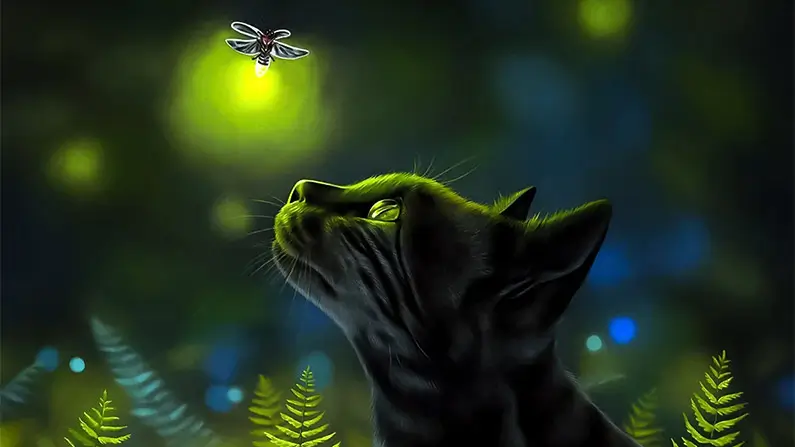
Fireflies typically prey on worms, snails, and other small invertebrates, paralyzing their victims by injecting a numbing chemical. As adults, some species may also feed on pollen and nectar — and in certain cases, even other fireflies. Nature can be surprisingly ruthless. [source]
6 They’ve long been part of human culture…
For centuries, fireflies have played a role in human culture around the world. In Japan, for example, the appearance of fireflies — celebrated during Hotaru Matsuri — is seen as a symbol of seasonal change and is marked with festivals and local celebrations. Their gentle bioluminescent glow has also inspired poetry, art, and folklore throughout history. [source]

You may also like
7 This is why light is so important to fireflies…
These fascinating insects have evolved their own glowing language. Their distinctive light isn’t used only to attract mates in the dark, but also serves as an effective defense mechanism. The flashing signals can warn predators that they are toxic or taste unpleasant, teaching many would-be attackers to stay away.
In other words, the light is both a love signal and a survival strategy — a biological tool that plays a crucial role in reproduction and protection in the wild. [source]
8 Fireflies are no longer collected the way they once were…
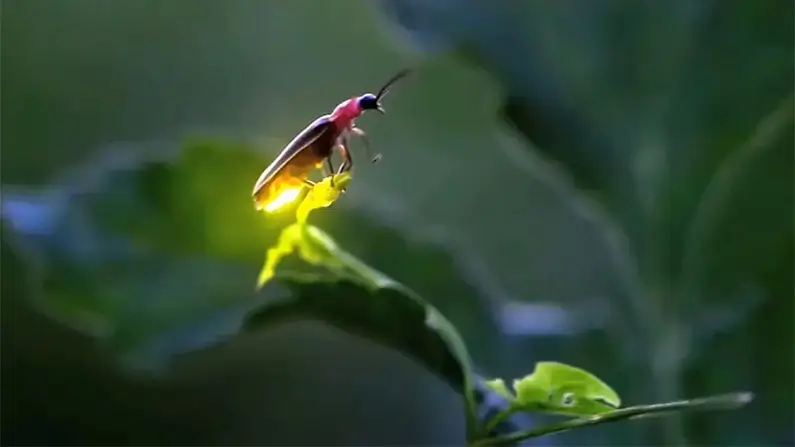
As mentioned earlier, fireflies contain luciferase, an enzyme once widely extracted for scientific research and food safety testing. Today, this practice is far less common, as synthetically produced luciferase is now typically used instead.
In the past, some companies and researchers did capture fireflies to obtain luciferase, a practice that could have negative effects on local populations. Thankfully, this approach has declined significantly, and synthetic alternatives are now preferred, helping reduce pressure on these insects in the wild. [source]

You may also like
9 Their populations are becoming increasingly threatened…
Even though humans no longer collect these insects for luciferase anywhere near as extensively as in the past, researchers have observed that firefly populations are declining rapidly. Their greatest threats include habitat loss, the use of pesticides, poor water quality, and light pollution, which makes it harder for them to find mates and communicate. [source]
10 Some species can even synchronize their flashes — and for a reason…
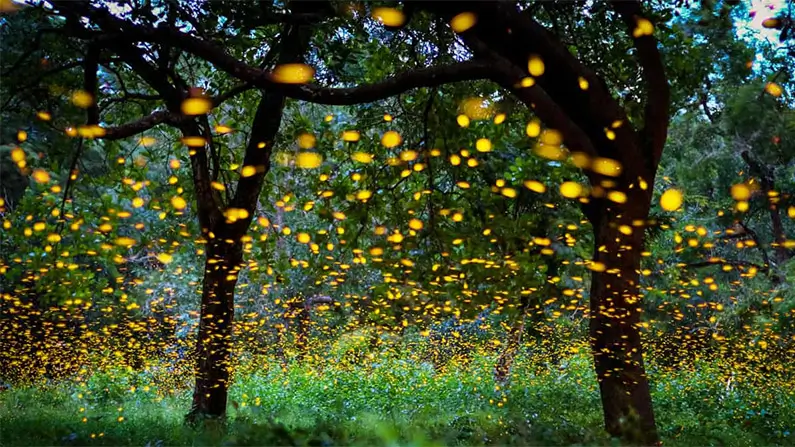
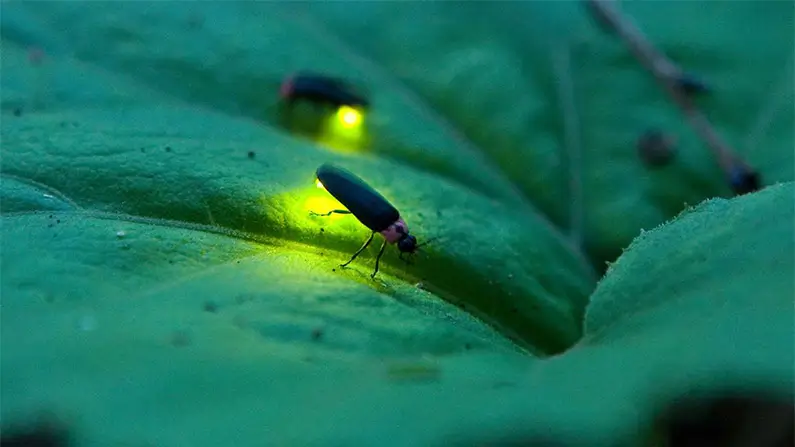
Photinus carolinus, often called the synchronous firefly, is famous for its ability to flash in perfect unison. This remarkable behavior is used by males during mating rituals to attract females. Large groups of males synchronize their blinking lights to create a stunning, coordinated light display, dramatically increasing their chances of being noticed. [source]

You may also like
5 Frequently Asked Questions About Fireflies
They glow because of bioluminescence, a chemical reaction in the abdomen that produces light. It’s mainly used for communication and mating, and sometimes to warn predators.
They are generally harmless. While they contain mild toxins, it would take large quantities to cause harm, and most animals avoid them due to their bitter taste.
They are found in many parts of the world, especially in warm, humid regions near forests, fields, and wetlands where moisture and vegetation are abundant.
Their decline is linked to habitat loss, pesticide use, water pollution, and especially light pollution, which interferes with their ability to communicate and reproduce.
Yes. Certain species are known for synchronized flashing, where large groups emit light in unison as part of mating displays — a rare and spectacular natural phenomenon.