
When you think of sweat, you might simply see it as your body’s way of cooling down after a tough workout or a hot summer day. But sweat is so much more than a sticky liquid — it’s a fascinating and sometimes bizarre part of our biology packed with surprises.
In this article, we dive into the strangest and most interesting facts about sweat that you’ve probably never heard before. From how your body uses it to stay in balance, to the unexpected ways sweat can influence your health and social life — get ready to be both surprised and amazed by what’s happening when your body starts to drip!
1 Men sweat about 40% more than women…
Even though women, on average, have more sweat glands, they actually produce less sweat. Research shows that men tend to sweat more than women under the same conditions, such as high heat or intense exercise.
This difference is likely due to hormonal and physiological factors. Women’s bodies may also be more efficient at evaporating sweat, meaning they can cool themselves with less visible moisture. [source]
2 We sweat almost 300 liters a year…
The average person produces around 0.5 to 1 liter of sweat per day under normal conditions. If we use a rough daily estimate of 0.75 liters, that adds up to about 273 liters per year. And of course, some people sweat more — and some less. [source]
3 An estimated 240 million people worldwide struggle with “extreme” sweating…
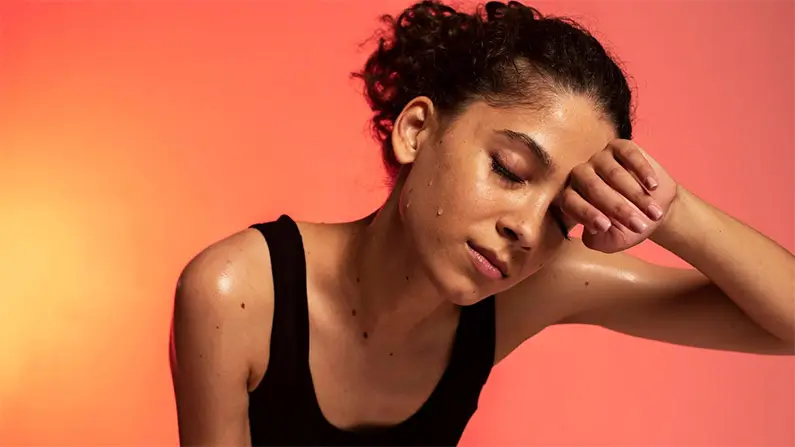
Hyperhidrosis is a medical condition where a person sweats far more than normal, even without physical effort or high temperatures. It can affect different parts of the body, such as the underarms, hands, and feet. The condition may be primary (idiopathic) with no clear cause, or secondary, triggered by another medical issue or medication.
It’s estimated that around 2–3% of the population may live with hyperhidrosis. People with the condition often face social and emotional challenges, including embarrassment and even depression. [source]

You may also like
4 Your feet have over 250,000 sweat glands…
Your feet (yes, mine too) contain more than 250,000 sweat glands, which is far more than many other parts of the body — even more than your entire back. The unpleasant smell isn’t caused by the sweat itself, but by bacteria that thrive in the moist environment, breaking down the sweat and creating that classic foot odor. [source]

5 Humans can, in rare cases, sweat blood…
People can experience a rare condition called hematohidrosis, where sweat becomes mixed with blood. This phenomenon occurs when the tiny capillaries surrounding the sweat glands rupture during extreme physical or emotional stress, allowing blood to seep into the sweat.
Hematohidrosis is extremely rare, and there are very few documented cases. Historically, it was described by Leonardo da Vinci, who noted a soldier sweating blood before battle. It has also been reported during intense situations such as executions, bombings like the London Blitz, and violent storms at sea. [source]
6 Emotions can change the smell of your sweat…
Studies have shown that emotions can alter the chemical makeup of sweat. In an Austrian experiment, participants collected sweat while watching horror movies one day and neutral films on another. A separate group of volunteers smelled the samples — and could identify which sweat came from the horror-movie day.
Sweat produced during stress or strong emotions — sometimes called stress sweat — has a different scent than ordinary perspiration.
And yes, we absolutely feel sorry for the poor volunteers who had to sniff those samples. [source]
You may also like
7 Vegetarians’ sweat smells better than that of meat-eaters…
Research has shown that sweat from people who follow a plant-based diet is perceived as more pleasant than the sweat of meat-eaters (if any sweat can be called pleasant). Studies suggest that those who eat mostly plants tend to have a less intense and more neutral scent compared to individuals who consume a lot of meat.
A 2016 study published in Chemical Senses found that women who smelled sweat samples from both vegetarians and meat-eaters rated the vegetarian samples as more pleasant and attractive. This is believed to be linked to how a plant-based diet changes the body’s chemical composition, which in turn affects body odor. [source]

8 Water and smell: How different sweat glands affect your sweat…
Sweat is made mostly of water, but its contents vary depending on which type of gland produces it.
Apocrine glands:
These are larger and found mainly in the armpits, groin, and chest. They produce a thicker, more concentrated sweat that tends to smell stronger, especially after puberty. Because apocrine glands sit near hair follicles, their secretions can develop more odor — which is why stress sweat often smells worse.
Eccrine glands:
These are the most common sweat glands and produce the majority of the watery sweat your body releases. Eccrine sweat is primarily water, but it also contains tiny amounts of salt, proteins, urea, and ammonia. Eccrine glands are spread across the entire body, with high concentrations on the palms, soles, forehead, and underarms. [source]

You may also like
9 Why we start sweating when we eat spicy food…
Spicy foods that contain capsaicin — the active compound in chili peppers — can trick the brain into thinking your body temperature is rising. That perceived heat triggers sweat production as a way to cool the body down.
Food allergies or intolerances can also cause sweating during or after meals. When the body reacts to allergens or struggles to break down certain ingredients, it can lead to increased sweat production.
And then there’s “meat sweats“, a term used to describe sweating after eating large amounts of meat. This happens because the body uses a lot of energy to digest proteins and fats, raising internal temperature and causing you to sweat even more. [source]

10 Alcohol can trick the body into thinking it’s exercising…
When you drink alcohol, it triggers several changes in the body that mimic physical activity. Alcohol can raise your heart rate and dilate blood vessels, effects similar to what happens when you work out. This widening of the vessels increases blood flow to the surface of the skin, creating a feeling of warmth.
In response, the body may ramp up sweat production to cool itself down, even though you’re not actually active. That’s why you might notice increased sweating after consuming larger amounts of alcohol — the body believes it needs to lower its temperature. [source]

You may also like
Xtra Those yellow stains on white shirts are the result of a chemical reaction…
Sweat itself is colorless and odorless. The yellow stains on white shirts or sheets come from a chemical reaction between sweat and antiperspirant. Aluminum — the active ingredient in many antiperspirant products — reacts with the salts in sweat, creating those yellow marks.
This is a common cause of fabric discoloration, especially in the armpits where antiperspirant is applied. [source]
5 Frequently Asked Questions About Sweat
We do it to regulate body temperature. When we get warm, fluid is released onto the skin and evaporates to cool us down.
The moisture itself is odorless. Smell appears when bacteria break down the moisture and produce compounds with a strong scent.
Most people release 0.5–1 liter per day, depending on temperature, activity, stress, and genetics. Hot climates and exercise increase output.
Yes — spicy foods, caffeine, and large protein-heavy meals can all trigger the body to respond as if it’s overheating, leading to more moisture.
Not always. Some people experience hyperhidrosis, where the body produces more moisture than it needs. It’s treatable, and a doctor can help manage symptoms.