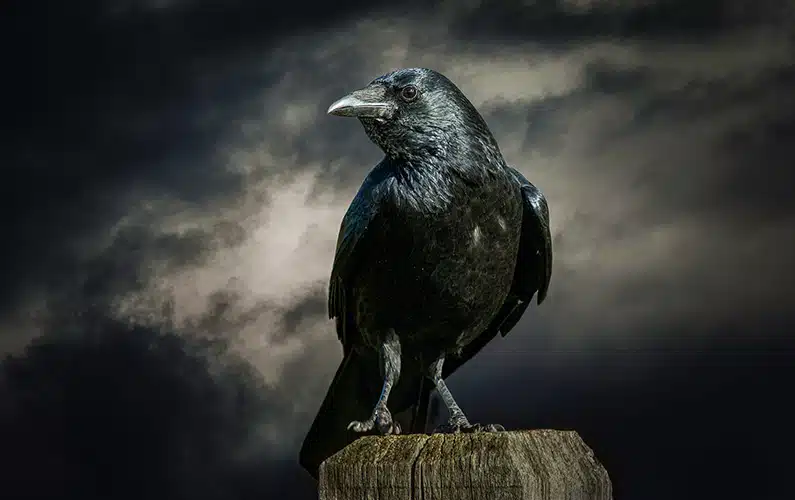

Cows (Bos taurus) are a central part of agriculture and daily life, but how much do we really know about them? Even though we see them grazing in fields and printed on milk cartons, there are countless fascinating and unexpected facts about cows that most people have never heard of.
In this article, we’ll reveal ten surprising truths about these remarkable animals that may change the way you see them forever.
Read on and discover what you probably didn’t know about cows!
1 Cows have social behavior similar to humans…
Cows are naturally social animals that form herds and build relationships within them. Research shows they can develop close friendships with certain individuals and prefer spending time with those companions. They also display signs of dislike or avoidance toward others in the group, choosing to keep their distance when tensions arise.
This dynamic mirrors the way people form bonds — seeking out friends while steering clear of those they don’t get along with. [source]
2 Cows can’t see red and green – during bullfighting it’s movement, not color, that triggers the bull…
Cows have dichromatic vision, meaning they cannot perceive red and green the way humans with normal color vision do. They are essentially color-blind to those hues, seeing mainly shades of blue and yellow instead.
So during bullfighting, it isn’t the red cloth (the muleta) that irritates the bull — it’s the rapid motion and waving that provokes a reaction. The color red is used mostly for tradition and visual drama, not because it influences the animal. [source]

3 Cows have exceptional hearing…
Cows possess a wider hearing range than humans, able to detect both lower and higher frequencies. While people typically hear sounds from around 20 hertz to 20 kilohertz, cows can pick up vibrations between 23 hertz and 35 kilohertz.
This enhanced sensitivity allows them to communicate more effectively, stay alert to subtle changes in their surroundings and detect possible threats long before humans would notice them. [source]
You may also like
4 They chew and chew… and chew…
Cows are ruminants, meaning they have a unique digestive system that requires them to chew their food multiple times. When they eat, they don’t just chew grass once — they swallow it, bring it back up and chew it again in a process known as rumination.
A cow can make around 50 chews per minute when actively feeding. Over the course of a day, that adds up to 40,000–50,000 jaw movements, all part of their incredibly efficient way of breaking down fibrous plants like grass and hay to extract nutrients. [source]
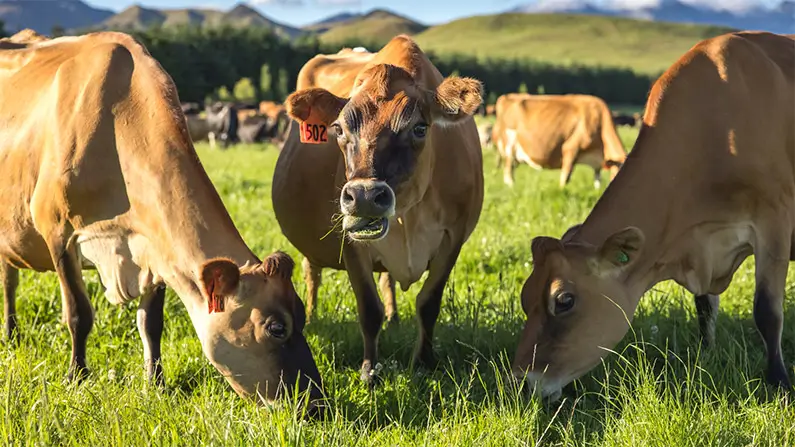
5 A cow’s incredibly wide field of vision helps detect danger…
Cows have a remarkably wide field of view thanks to the placement of their eyes on the sides of their head. This gives them nearly 300 degrees of vision, far greater than the roughly 180 degrees humans can see.
Such panoramic sight helps them spot potential predators or threats approaching from many directions — a crucial survival advantage for a prey animal. Their broad visual coverage allows for constant awareness of their surroundings, keeping the herd safer. [source]
6 In some cultures, a cow’s coat patterns carry meaning…
These animals are known for their distinct coat markings, the unique mix of spots and colors on their hides. In certain regions and traditions, these patterns are believed to be linked to personality traits. Some people claim that cows with specific markings are naturally calmer, gentler or more playful than others.
There are also stories — and real observations — of cows demonstrating problem-solving skills, remembering locations and occasionally showing surprising resourcefulness. Their social awareness and intelligence make them far more fascinating and complex animals than many assume. [source]

You may also like
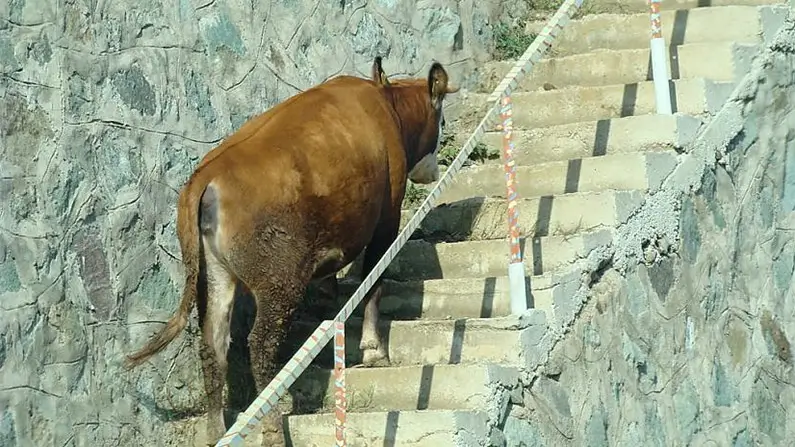
7 It’s just a myth that cows can’t walk down stairs…
Despite what the old saying claims, cows are perfectly capable of walking both up and down stairs. There is no anatomical limitation that prevents them from descending — which makes the myth that they can only go up but not down completely false.
The story seems to stem from misunderstandings — or perhaps playful exaggerations — rather than anything based on reality. Their legs and joints are designed to handle uneven terrain, meaning they can navigate stairways, hills, slopes and all kinds of ground when necessary. [source]
8 Just like horses, cows are unable to vomit…
Cows — like other ruminants such as horses — do not have the ability to vomit. This is due to the specialized anatomy and physiology of their digestive system. Their four-chambered stomach breaks down food in several stages before nutrients are absorbed, making it extremely difficult to reverse the process.
A ruminant’s digestive system is perfectly adapted for breaking down fibrous plants like grass and hay, but it lacks the mechanisms needed to expel food back up. So the inability has nothing to do with weakness — it’s simply a consequence of their highly efficient and specialized stomach structure. [source]
You may also like
9 How much water a cow drinks each day…
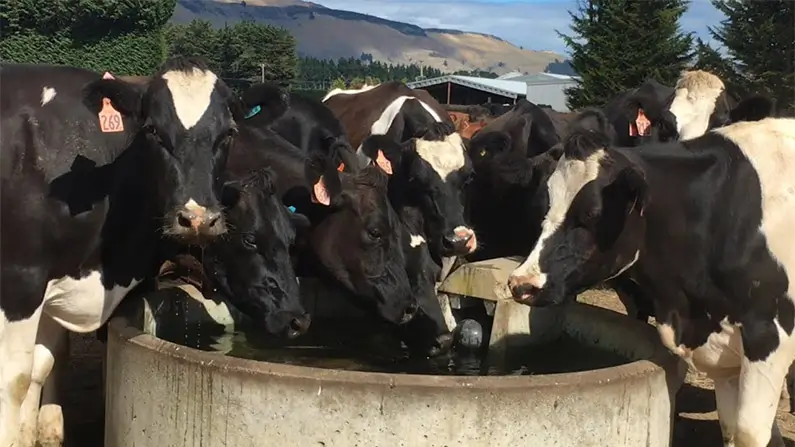
An adult cow typically drinks between 38 and 57 liters of water per day. The exact amount can vary depending on factors such as body weight, age, temperature and the type of feed they consume.
Cows producing milk — or living in hotter climates — may significantly increase their water intake to regulate body temperature and support milk production. [source]
10 Cows have a sense of smell similar to a dog…
Cows possess a highly developed sense of smell, comparable to that of a dog. Their ability to detect scent helps them identify food, recognize other members of the herd and stay alert to possible dangers in their surroundings.
They also have a large number of olfactory receptors in their noses, allowing them to pick up and distinguish different scents from long distances. [source]

You may also like
Xtra Cows truly have a magnetic sixth sense…
Another fascinating fact is that they appear to have a natural ability to detect the Earth’s magnetic field. Studies suggest they contain magnetic particles within their bodies that act like an internal compass.
This hidden sense helps them orient themselves and navigate as they move across open landscapes — a subtle skill most people never realize they possess. [source]
5 Frequently Asked Questions About Cows
Yes — they are far smarter than most people think. They can solve simple problems, remember locations and individuals, and show curiosity and learning ability in everyday life.
They have one stomach with four compartments — the rumen, reticulum, omasum and abomasum — all designed to efficiently break down grass and tough plant fibers.
They can rest on their feet, but they lie down for deep sleep. Short naps often happen upright, but true REM sleep requires them to lie on the ground.
The average lifespan is 15–20 years, though many farm animals don’t reach their full potential due to dairy and meat production cycles.
Their diet mainly consists of grass, hay and silage, but depending on the purpose (dairy or beef), they may also receive grains, minerals and supplements to stay healthy and productive.